

This symposium, organized as part of the Médiamerica seminar series on the news media in the United States, aims to examine the relationships between the media, representations of public order, and law enforcement agencies in American media culture. Since the mid-20th century, issues of crime, law enforcement, and public authority have occupied a central place in the media landscape, appearing in various formats ranging from print media and radio to documentaries and television news. These representations do not merely relay the activities of law enforcement agencies: they actively participate in defining the events, categories, and interpretive frameworks through which they are understood in the public sphere. The seminal work of Stuart Hall and his collaborators, notably in Policing the Crisis (1978), has demonstrated how the media play a decisive role in shaping public debates on crime and law enforcement, helping to structure collective perceptions, analytical categories, and social reality as it is publicly understood.
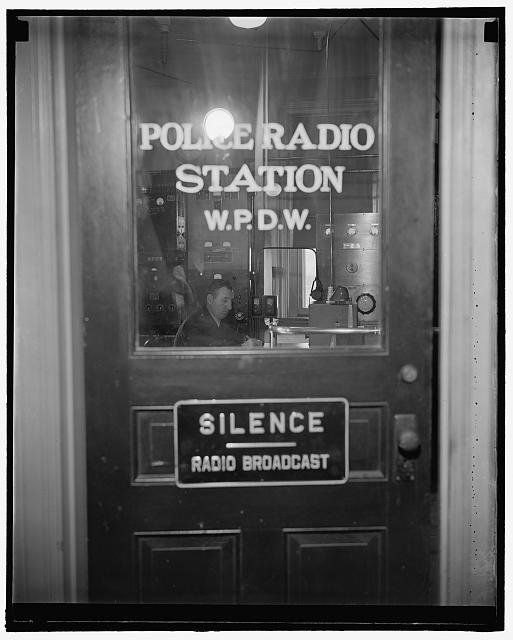
With this in mind, the symposium aims to examine the role of media infrastructures and recording mechanisms—police radio, visual reporting, film documentaries, television shows, and audiovisual journalism—in capturing, circulating, and narrating the interactions between the police, the state, and the public. An invited lecture by by prof. Jason Hill (University of Delaware) on the film Law and Order (Frederick Wiseman, 1969) will serve as a starting point for a broader reflection on the media forms through which scenes of law enforcement become visible, audible, and interpretable.
Bringing together researchers in American studies, media history, and visual culture, this conference aims to foster an interdisciplinary dialogue on how news media shape representations of authority, social conflict, and the circulation of information in the North American context.
Cette journée d’études, organisée dans le cadre du séminaire Médiamerica consacré aux médias d’information aux États-Unis, propose d’examiner les relations entre médias, représentations de l’ordre public et institutions policières dans la culture médiatique américaine. Depuis le milieu du XXe siècle, les questions de criminalité, de maintien de l’ordre et d’autorité publique occupent une place centrale dans l’espace médiatique, apparaissant dans des formats variés allant de la presse écrite et de la radio aux documentaires et aux journaux télévisés. Ces représentations ne se contentent pas de relayer l’activité des forces de l’ordre : elles participent activement à la définition des événements, des catégories et des cadres d’interprétation à travers lesquels ils sont appréhendés dans l’espace public. Les travaux fondateurs de Stuart Hall et de ses collaborateurs, notamment dans Policing the Crisis (1978), ont montré combien les médias jouent un rôle déterminant dans la constitution même des débats publics autour de la criminalité et du maintien de l’ordre, en contribuant à structurer les perceptions collectives, les catégories d’analyse et la réalité sociale telle qu’elle est publiquement comprise.
Dans cette perspective, la journée d’études entend interroger le rôle des infrastructures médiatiques et des dispositifs d’enregistrement — radio policière, reportage visuel, documentaire filmique ou journalisme audiovisuel — dans la capture, la circulation et la mise en récit des interactions entre la police, l’État et le public. Une communication invitée par Prof. Jason Hill (University of Delaware) consacrée au film Law and Order (Frederick Wiseman, 1969) servira de point de départ à une réflexion plus large sur les formes médiatiques à travers lesquelles les scènes de maintien de l’ordre deviennent visibles, audibles et interprétables.
Réunissant des chercheurs en études américaines, en histoire des médias et en culture visuelle, cette journée d’études vise à favoriser un dialogue interdisciplinaire sur la manière dont les médias d’information donnent forme aux représentations de l’autorité, du conflit social et de la circulation de l’information dans le contexte nord-américain.
Programme:
10h—10h15: Café, Introduction par l’équipe Médiamerica
-10h15—11h15: Jason Hill (University of Delaware), “Deputies: American Police Radio and the Deputization of the Photojournalist”
-Pause Café
-11h30—12h: Anaïs Le Fèvre-Berthelot (Université Rennes 2), “Municipal Radio: From Helping the Police to Shaping the Polis“
-12h—12h30: Emmanuelle Delanoë-Brun (Université Sorbonne Nouvelle), “Serializing law and order: the politics of popular cop shows”
-12h30—13h: Concluding Discussion